
‘Hot Tub Bear’ delights new generations thanks to Monrovia’s public art program
Jackie Krentzman is a Bay Area-based writer and editor.

In 2004, Monrovia residents began noticing seemingly random works of art popping up throughout the city. First, there was a statue of a jaunty Mark Twain reading on a bench. A few years later, painted sculptures of bears began appearing in front of local businesses, along with large sculptures and elaborate murals on utility boxes.

The art was the result of the city’s new Art in Public Places program. Monrovia officials launched the program to foster civic pride, strengthen community, support creativity, and boost the profile of local businesses in this city of 36,000 nestled in the San Gabriel Mountain foothills.
“Art in Monrovia resonates with everyone,” says Community Development Director Sheri Bermejo. “As life has become more complicated in recent years, public art has become something that brings our community together. No matter your personal views or background, everyone can enjoy art.”
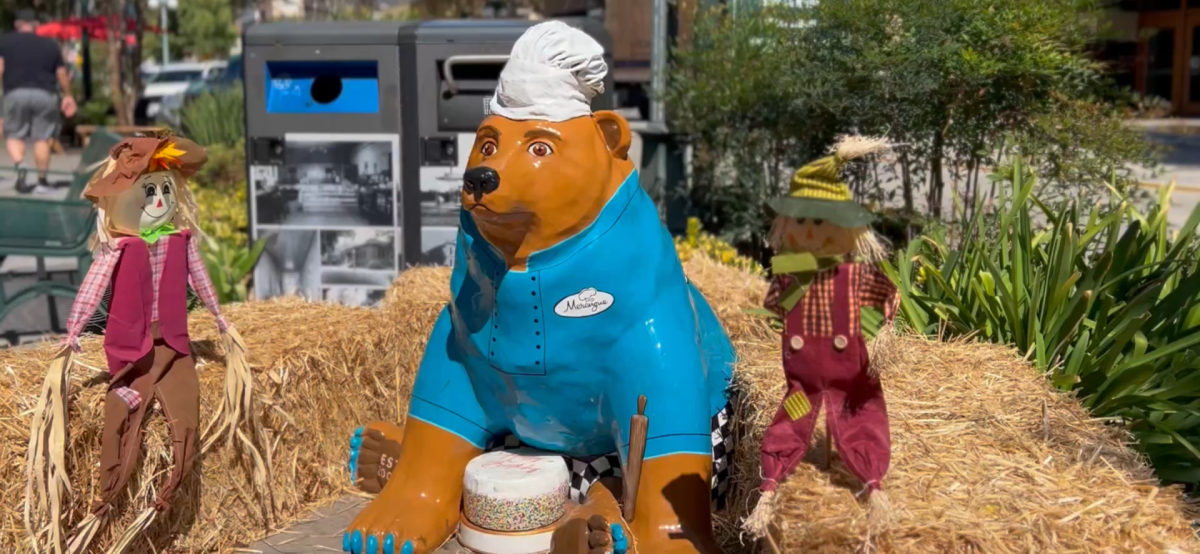
The most popular series is Samson the Bear, launched in 2011 as part of the city’s 125th anniversary celebration. The city bought eight fiberglass bears, which local artists painted in honor of Monrovia’s famous “Hot Tub Bear.”
In the 1990s, a 500-pound black bear wandered down from the foothills into Monrovia. He delighted in lounging in backyard hot tubs. When the California Department of Fish and Game decided to euthanize him because of his health, residents protested and Samson lived out the rest of his life in the Orange County Zoo. Today, 17 elaborately decorated Samson bears dot Monrovia’s cityscape.
The bears have reached social media icon status.
“People take selfies with the bears and post them on Instagram,” says local artist Traci Loving-Salazar, who has painted nine bears and a utility box.

Loving-Salazar, a retired teacher at the California School of the Arts, says her favorite bear is the “Monrovia Area Partnership (MAP) Samson Bar” in front of city hall. She painted it to look like a jigsaw puzzle, with help from members of the community.
Other bears produced by the program include “Wildlife Samson Bear” inside the public library, covered with various wild animals in a jungle and children reading a book, and “Merengue Samson Bear,” painted in a bakery chef uniform with a cake.
“I love it when I come downtown to go dinner and see kids climbing on the bears with their parents and grandparents snapping photos,” Loving-Salazar says.
In 2020, Monrovia revamped the program to broaden community engagement and increase visibility. The new framework introduced new and additional Art on the (utility) Box, Neighborhood Treasures, Adopt a Samson, Footnotes (facts about the city or short poems embedded in sidewalk cement), and the Tree Ornament Contest. The city also focused on commissioning larger, one-of-a-kind installations, including a large mural tribute to Route 66.
Since its inception, the program has generated over $1.2 million in public art investments and added more than 185 artworks throughout Monrovia.
The program, with an annual average budget of $75,000, is largely funded by residential and commercial developers. New residential projects of five or more units and commercial projects valued at more than $1 million can either include a public art component or contribute an in-lieu fee to fund future installations.
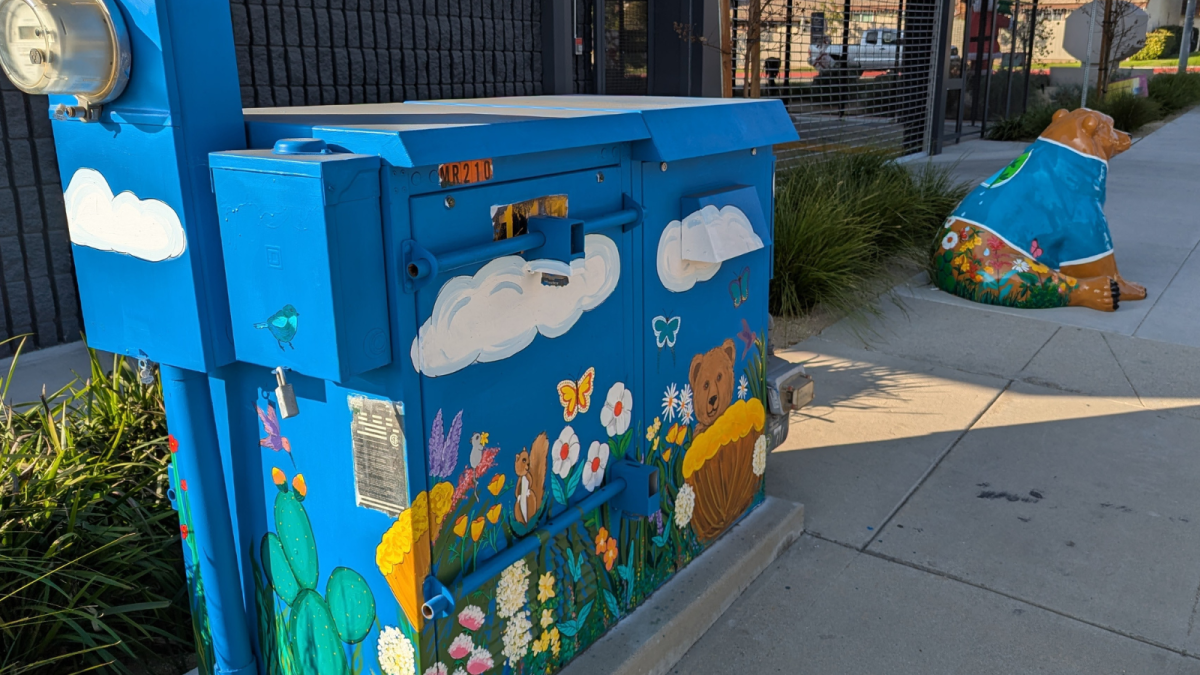
A plain, fiberglass sculpture of a bear costs $2,300. Hiring an artist to paint basic details on the bear runs around $1,500. Business owners can commission bears to situate in front of their business and shoulder these costs. The city installs the bear in front of the business.
But one of the most meaningful projects, says Project Coordinator Kerri Zessau, is Neighborhood Treasures. The program honors historically and culturally significant Monrovians by placing public art pieces within the neighborhoods most associated with each honoree. The artwork includes a decorative, informational plaque documenting the individual’s contributions.
“These unsung heroes did things like fight segregation, help others, and overcome major challenges,” Zessau says. “Local historians and MAP Leaders help determine the recipients celebrated for their contributions.”
The city has created an interactive map on its website so people can see where all the art is located, many of whom go on “treasure hunts” for the art. The city also collaborates with the school district, as teachers use the art to help students understand Monrovia’s history.
Zessau says Monrovia’s commitment to public art has paid off and then some.
“People who come to our old town for dinner or a movie, or to shop, now stay longer, which helps the economy,” Zessau says. “We have strategically placed some art in hidden places. You may walk down some alleyway and suddenly see a mural of angel wings. These surprises and the photo opportunities they provide keep people in our built environment longer.”