

Place and prosperity are inextricably linked, argues Harvard professor Raj Chetty
Jackie Krentzman is a Bay Area-based writer and editor.
For decades, Harvard economics professor Raj Chetty has been studying how changing kids’ neighborhoods can dramatically alter their economic outcomes. His work has repeatedly demonstrated that children who move from impoverished, isolated neighborhoods to more affluent, connected ones achieve markedly greater economic success. But what makes his research truly compelling is how extensive it is.
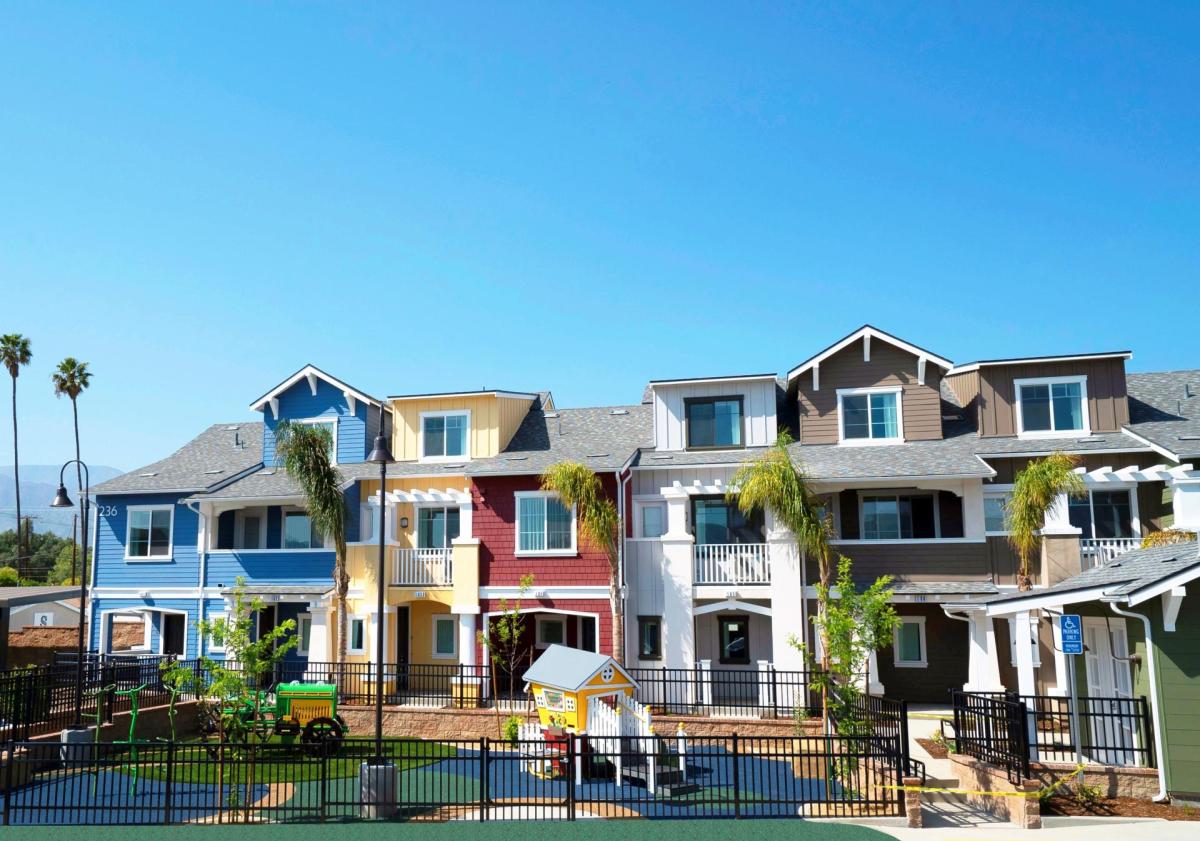
Recently, Chetty and his colleagues at Opportunity Insights analyzed how turning a low-income neighborhood into a mixed-income neighborhood impacts lifetime outcomes. His team examined reams of data generated by the federal HOPE VI program, a 30-year program that transformed public housing developments into mixed-income housing complexes.
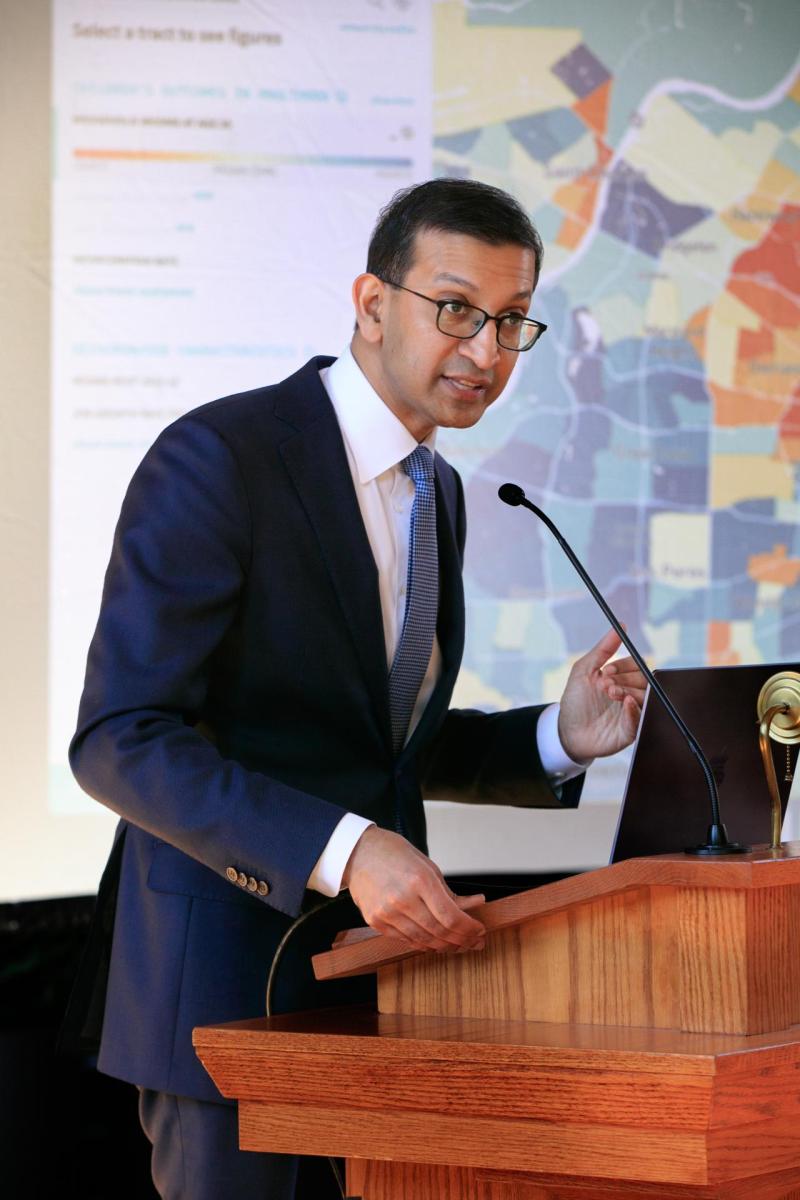
His team’s findings are remarkable. For example, kids raised in the revitalized public housing by the age of 30 earned 16% more than those raised in homes that weren’t redeveloped. The findings suggest that young adults raised their whole childhood in a HOPE VI building will earn 50% more than their peers in a dense housing project with concentrated poverty.
Last month, Western City conducted a Q&A with Chetty to discuss his findings and what cities can learn from them. The conversation has been edited for length and clarity.
Western City: Your research suggests that a big reason why mixed-income neighborhoods lead to better lifetime outcomes is that they foster cross-class social interactions. What can you tell us about this aspect of the findings?
One of the most important insights from our prior work is that who children grow up interacting with is one of the strongest predictors of upward mobility. Places where low-income children have more interaction with higher-income peers tend to have much higher rates of economic mobility.
What’s new in the HOPE VI research is that we’re now able to move beyond correlation and show that this relationship reflects a causal effect. When these redevelopments created more mixed-income environments, they also increased opportunities for cross-class interaction. That, in turn, was associated with better long-term outcomes for children.
As for why these connections matter, there are a couple of leading hypotheses.
First, it could be about access to information. Children learn from the people around them — how to think about school, college, and careers — and those insights may be more accessible in more socioeconomically connected environments.
Second, we believe there may be an important role model effect. Being exposed to peers or families who have navigated pathways to upward mobility can change what feels possible.
A few of the HOPE VI sites are in California. Are there any factors, such as the cost of living, that make California unique?
California isn’t fundamentally different from other states in how these dynamics play out, but it may illustrate some of the key forces more starkly. We find what matters most for mobility is not broader federal or state-level policies — though these can play a role — but the characteristics of the neighborhoods children grow up in: school quality, levels of economic connectedness, and the degree of concentrated poverty.
HOPE VI and similar efforts to transform distressed neighborhoods are directly targeting those conditions by reducing concentrated poverty and creating environments that foster more interaction across income groups. In places like California’s larger metropolitan areas, where contrasts between high- and low-opportunity neighborhoods can be especially pronounced, you can see particularly large gains when environments improve in sustained ways during childhood.
How can cities best foster and develop these connection-based revitalization projects? And given that this would take years and years, how can city officials make this case to their constituents?
The key insight from this research is that it’s not just an investment in a place that matters, but how well families living in that place are connected to opportunity. Cities can foster that by reducing isolation through mixed-income development, improving access to high-quality jobs and schools, or investing in community institutions that bring people from different backgrounds into contact with one another.
There are two ways cities can make the case. First, the evidence shows that these changes can have large long-term returns by improving outcomes in adulthood — higher earnings, higher rates of employment and college attendance, and lower rates of incarceration — that are comparable to other major infrastructure investments. Second, there are shorter-term indicators, like improvements in school engagement, reductions in concentrated poverty, or stronger cross-community ties, that can signal progress along the way. Framing these investments as both long-term drivers of mobility and near-term improvements in community well-being can help build the case for sustained commitment.
Are there any particular obstacles or opportunities that California cities may experience?
California cities face both significant opportunities and constraints, such as strong underlying economies and pockets of high opportunity, alongside high housing costs, segregation, and uneven access to networks and resources. What matters most is how policies address that underlying disconnect.
We are seeing growing interest in applying the broader body of our research in different ways across California. In higher education, for example, California recently passed a law banning legacy and donor admissions at both public and private colleges, reflecting a broader recognition — grounded in our research — that access to these colleges can play a powerful role in shaping pathways for upward mobility. And leaders like Mayor Dan Arriola in Tracy have engaged directly with this work through initiatives like the Bloomberg Harvard City Leadership Initiative, exploring how insights from mobility research and programs like HOPE VI can inform local revitalization strategies.
What should officials at national, state, and local levels change about their approach to mixed-income neighborhoods?
Mixed-income neighborhood redevelopment [like in HOPE VI] is one pathway, but it’s not the only one — and it’s not always the most feasible in the short term. There are other ways cities and policymakers can think about fostering those connections, often at lower cost, whether through school integration efforts, designing public spaces and institutions that bring people from different backgrounds together, or expanding access to networks through mentorship, internships, and community-based programs. The goal is to create environments across multiple domains where opportunity is not segregated.
But the obstacles are real. Efforts to create more integrated environments often run into local resistance — often described as ‘not in my backyard’ concerns — where people may support these ideas in principle but worry about the impacts on their own communities or children. The evidence is actually quite reassuring on that front: More connected environments tend to produce meaningful gains for lower-income children, with little to no negative effects for those from higher-income families. In that sense, this is not a zero-sum tradeoff.
More broadly, when more people are able to reach their potential, we see benefits that extend to society as a whole — stronger economic growth, lower social costs, and more broadly shared prosperity. Framing these efforts not just as investments in equity, but as investments that benefit everyone, is key to building the sustained support needed to make them work.