
Tulare city officials hope new shelter model moves people from the streets to stability
Jackie Krentzman is a Bay Area-based writer and editor.

In a ten-year span, trains killed 14 people living in encampments along railroad tracks in Tulare. Officials ruled most of these deaths as suicides. Those horrible occurrences, coupled with a rising number of people experiencing homelessness, led the city council to prioritize creating temporary shelters with a full range of supportive services.
“Our city, like most cities in California, was scratching its head, trying to figure out what the right approach is,” says City Manager Marc Mondell. “We wanted to make sure that we were addressing resident concerns about safety, sanitation, and maintaining an inviting downtown, while at the same time doing it in a humane and effective way.”
Tulare, with a population of 73,000, is a majority Latino agricultural community built around dairy farming (the Parmesan cheese in green lid canisters is made there) halfway between Bakersfield and Fresno. Over the last decade, the number of people experiencing homelessness there has risen sharply, from less than 100 to over 300. The vast majority lived in encampments lining railroad tracks that bisect the city.
In 2018, Terry A. Sayre, aghast at the conditions and deaths along the railroad, decided to run for city council. At the time, the retired teacher was 74 years old and had never held elected office.
“The increasing number of people living on the streets concerned me,” she says. “These are my brothers and sisters. I realized that any one of us can end like that. Every one of them has a story, usually a heartbreaking one, and they deserve more.”
Sayre won the seat, and in large part due to her efforts, the city began a concerted push to better serve this population. It began by studying how comparable cities in the Central Valley were aiding unhoused residents. Sayre says the city took inspiration from Modesto.
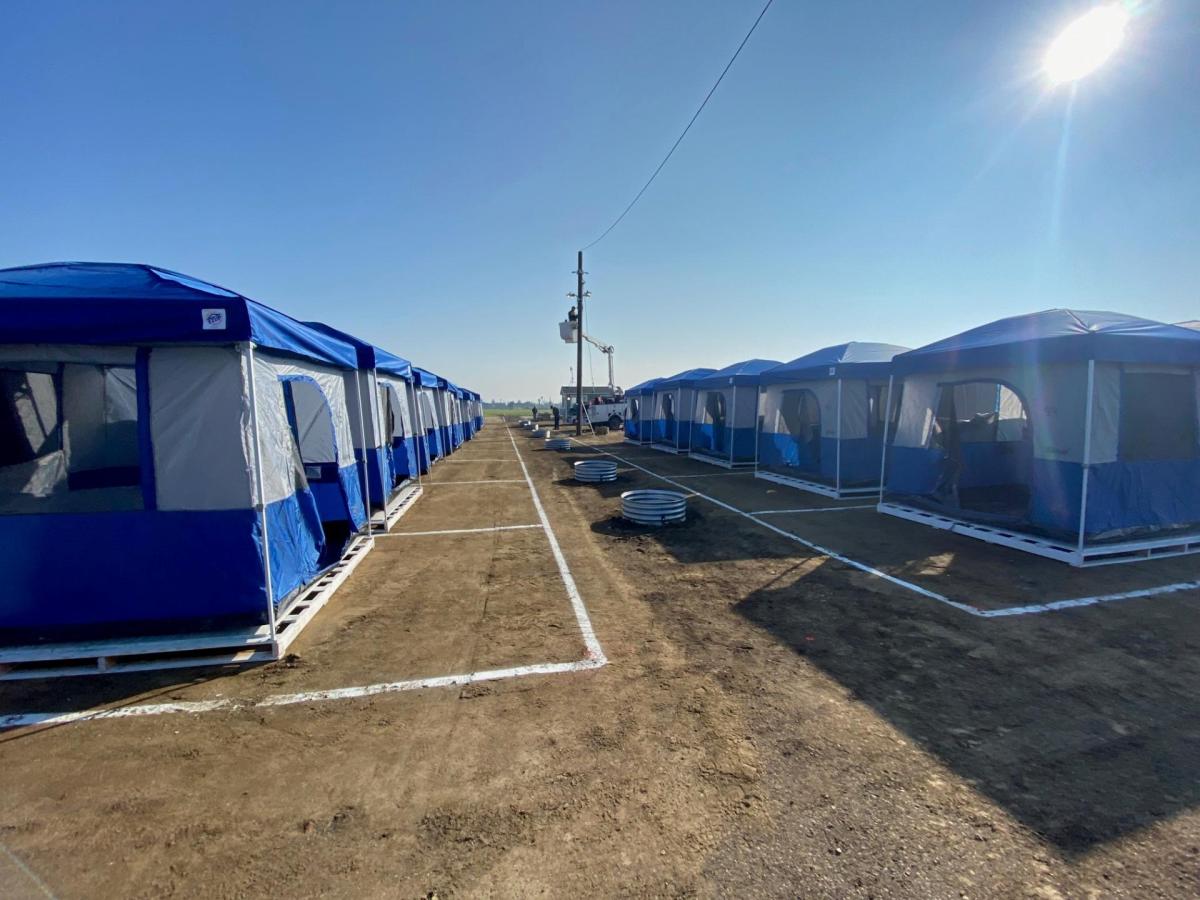
Tulare purchased land and created a temporary tent shelter village that opened in 2023. The village featured bathroom and shower facilities, a dog run, a picnic area with a grill, and storage lockers. Guests received one meal a day. After it opened, the city removed the ad hoc encampments along the railroad tracks and encouraged most of those living there to relocate to the city’s new temporary encampment.
“The day we opened, people were lined up to move in,” says Sayre.
The temporary encampment enables local public safety officials to better respond to emergencies. When the police or fire department got a call about a life-threatening emergency, such as an overdose, they didn’t always know where to go because the encampments were so spread out. Now, when people call in an overdose, they can say “lot 68,” and the responders know exactly where to go.
These efforts, funded largely by the state’s encampment resolution program, moved 139 people out of homelessness into permanent supportive housing from 2022 to 2024. City officials estimate that the temporary encampment, combined with effective housing navigation and rental assistance, placed an additional 53 people into permanent housing last year.
Still, this recent push has merely slowed, not stopped, homelessness in the city. To that end, the city was working on establishing a permanent shelter facility with a greater degree of supportive services.
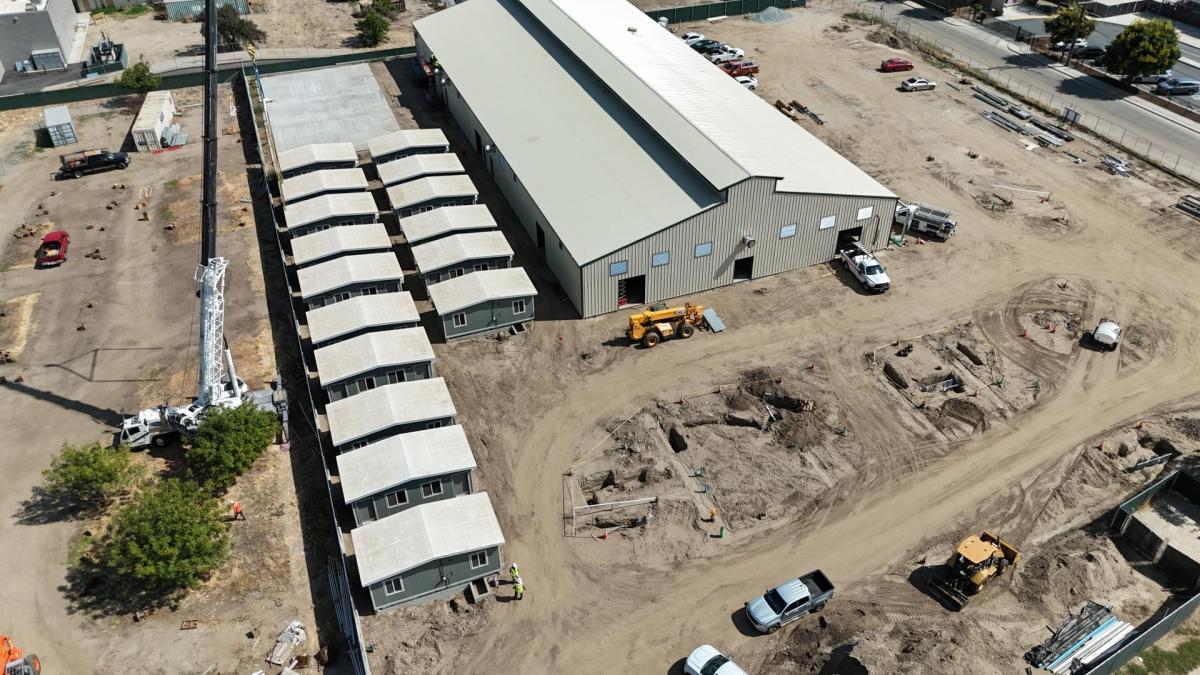
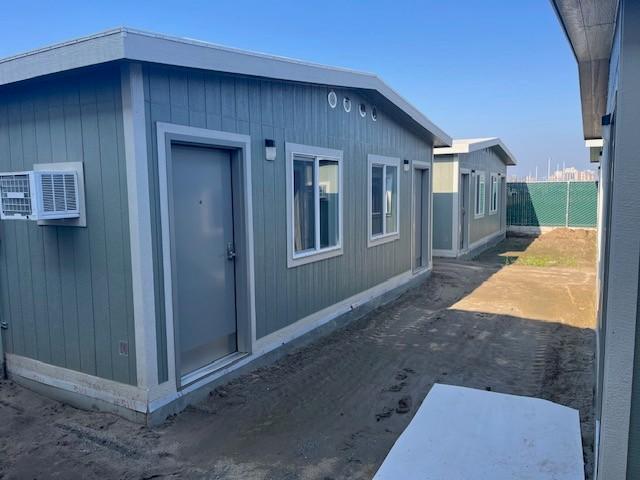
Tulare Cares Emergency Homeless Shelter is slated to welcome its first guests in April. The 20,000 square foot shelter will have about 200 beds, with capacity for 400 beds in case of a severe economic downturn or other drastic event that renders more people homeless. Guests will have on-site access to an array of support services provided by community-based organizations and the county, including housing navigation, social services enrollment, behavioral health care assessment and treatment, and some medical care.
The new shelter will be divided into three stages: entry, participation, and recovery. The entry stage will include a bed, secure storage, two meals and a snack a day, and laundry facilities. In the participation stage, those who are willing to help maintain the shelter will receive more amenities, such as screened sleeping areas, more storage, and access to skill-building classes. Finally, in the recovery stage, guests will have private sleeping quarters, money management training, and placement in city jobs. The eventual goal is for the city to help them land a private sector job after six months.
“The goal of these stages, as shelter guests get back on their feet, is to help them establish an employment record,” says Mondell, “so we can vouch for them with private sector businesses in the community, help them land jobs, and move into permanent housing and out of homelessness.”
Tulare is funding the $12 million shelter with a variety of federal and state grants and partnerships. Tulare County leased the land to the city for $1 over 20 years. The city primarily funded construction through state and federal grants and its own General Fund dollars. The roughly $200,000 monthly operating cost will be funded through a combination of city cannabis sales tax, federal Community Development Block Grant funds, the city’s General Fund, and grants. The county and its nonprofit partners will provide behavioral health services.
“The key to the success of this massive undertaking was that the city took the bull by the horns,” says Noah J. Whitaker, who coordinates the county’s homeless initiatives. “It didn’t shy away from the issue — in fact, it creatively brought in different city departments, such as parks and rec, specialized police units, [the city’s homeless assistance] team, public works, and more.
“[Homelessness] is a challenging issue, one that puts a drain on city resources, but they are doing it right by taking a humanitarian approach, while also being sensitive to the fact [that] if they are spending dollars on serving its population of people experiencing homelessness, other costs will go down.”
Mondell says the community’s response to the new shelter has been positive in large part due to its Tulare First policy, which prioritizes housing guests who have ties to Tulare.
“Normally, when communities start planning a shelter, some residents will absolutely do everything they possibly can to fight it, in large part because there’s always this assumption that if you build this shelter, people are going to come from everywhere,” says Mondell. “But not here. The Tulare First policy, plus placing [the shelter] in an [area] surrounded by existing county service providers, and the supportive culture of our community, helps to take care of the NIMBY issue. Our community is on board.”